
CHALLENGE
Designing a residence in the Boise foothills presents a complex intersection of environmental exposure, energy performance expectations, and livability requirements. The site’s elevation and orientation demanded careful consideration of solar access, thermal control, and wind exposure, while the client sought a comfortable, resilient home suitable for long-term family use. Achieving high energy performance without sacrificing daylight, views, or architectural expression required a disciplined approach to massing, glazing, and construction methodology.
SOLUTION
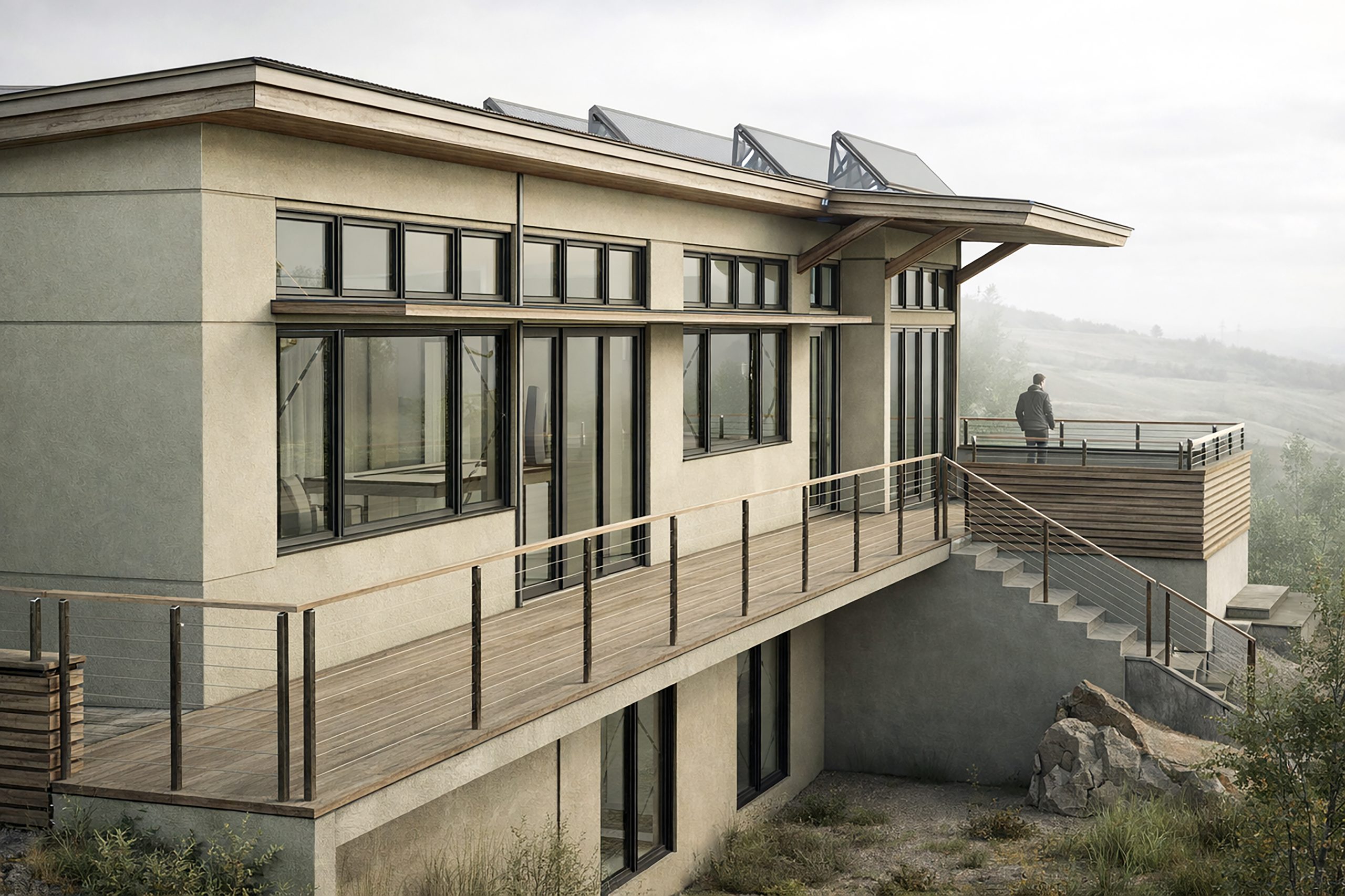
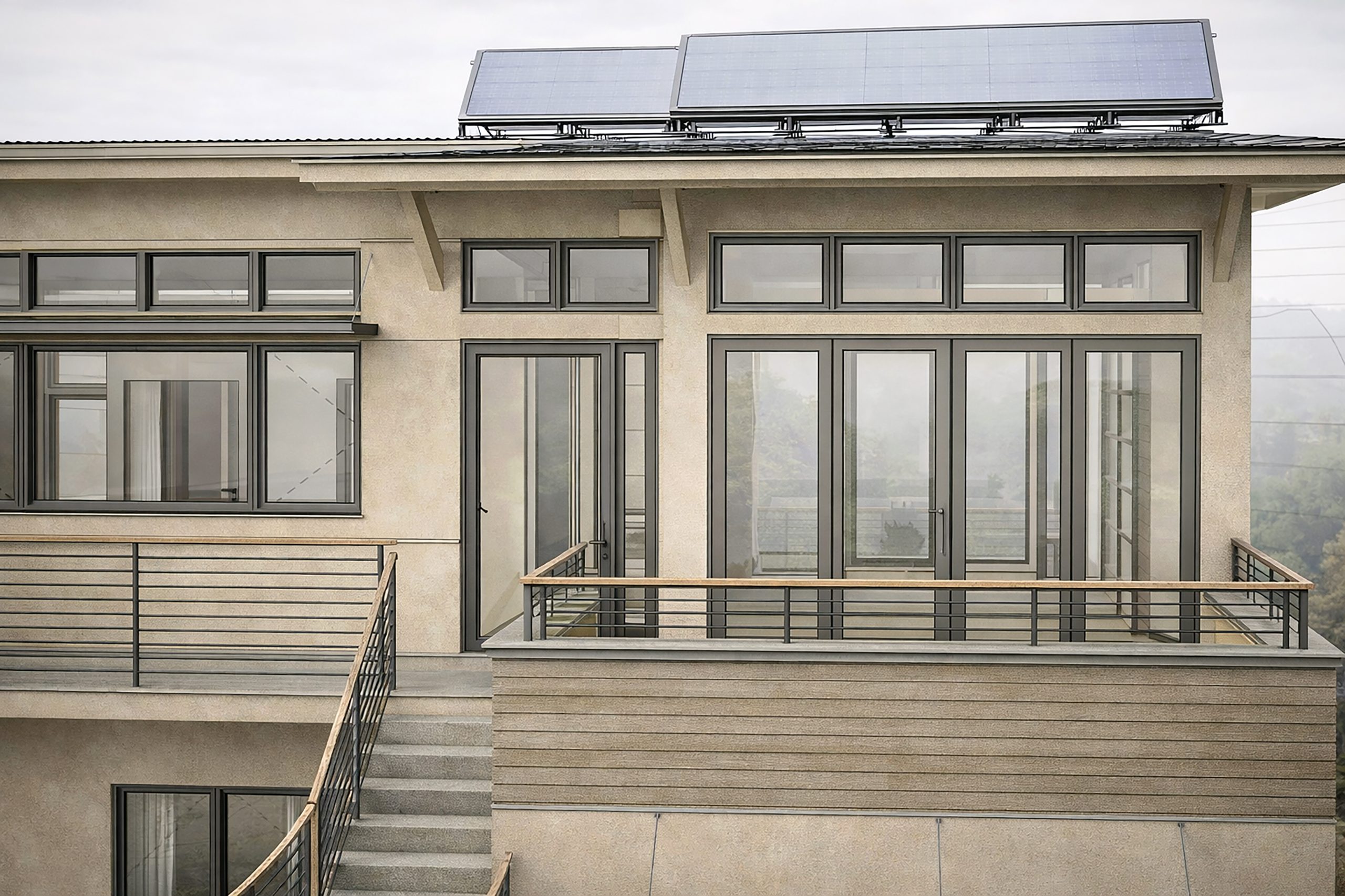
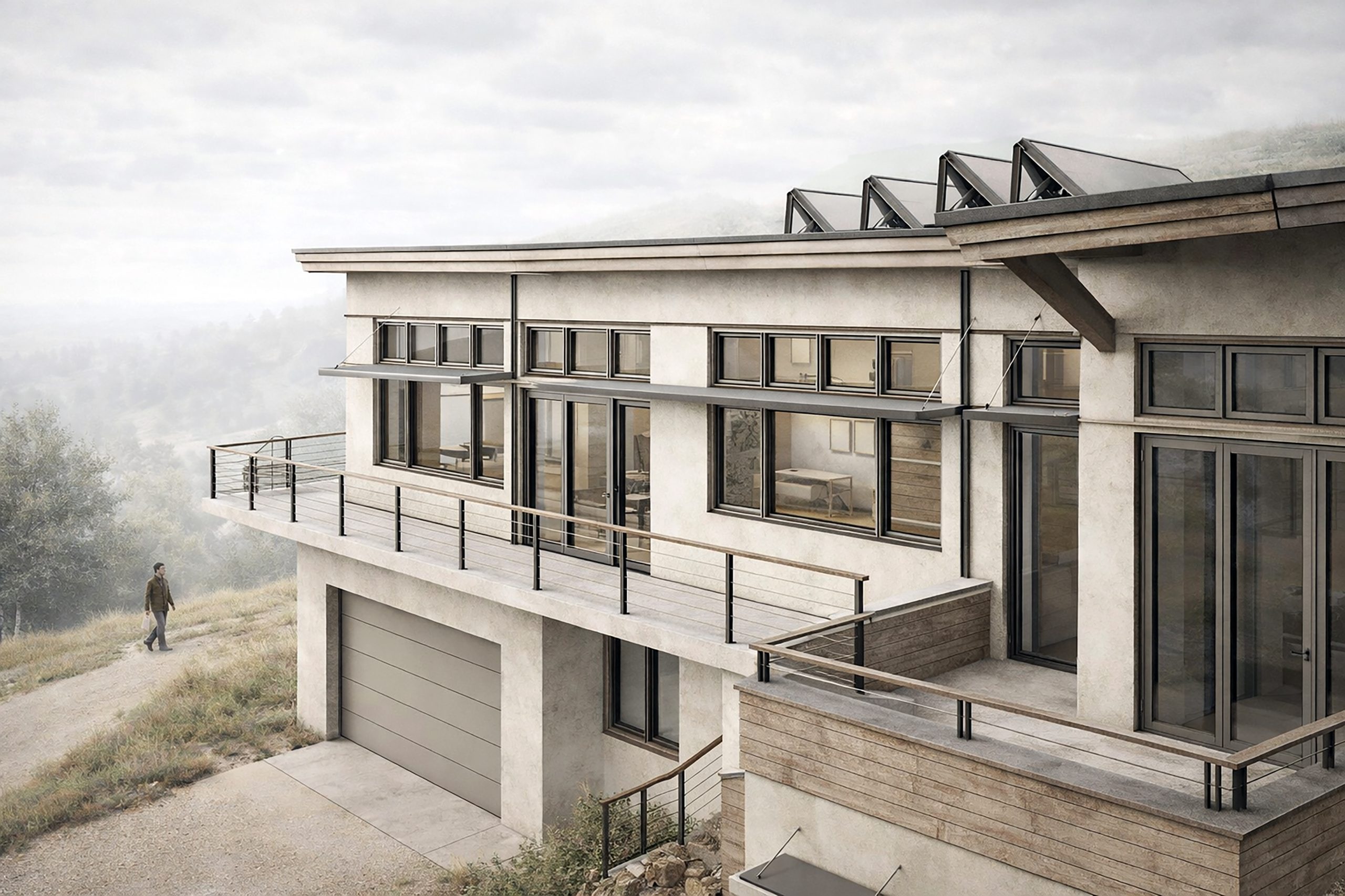
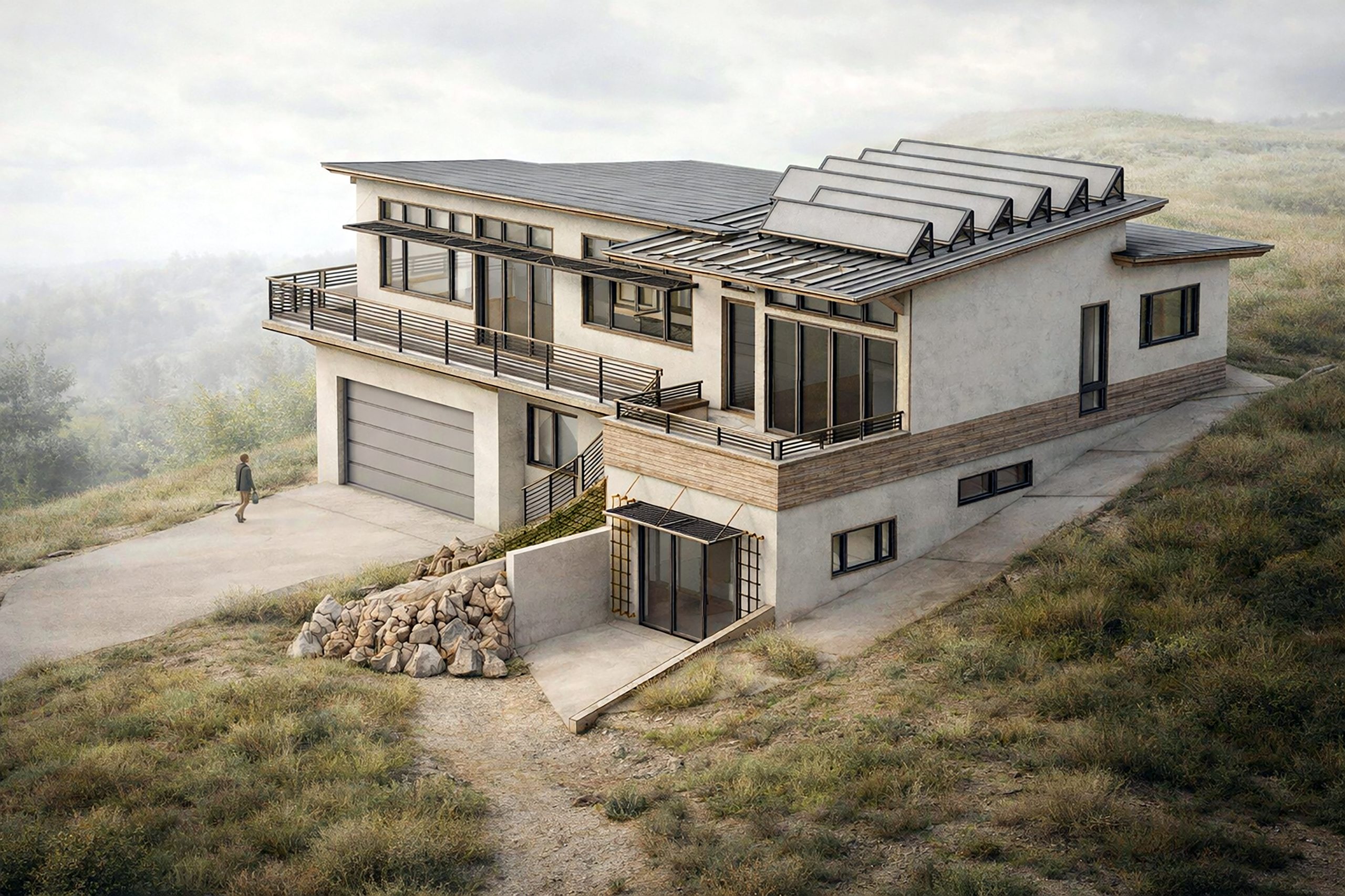
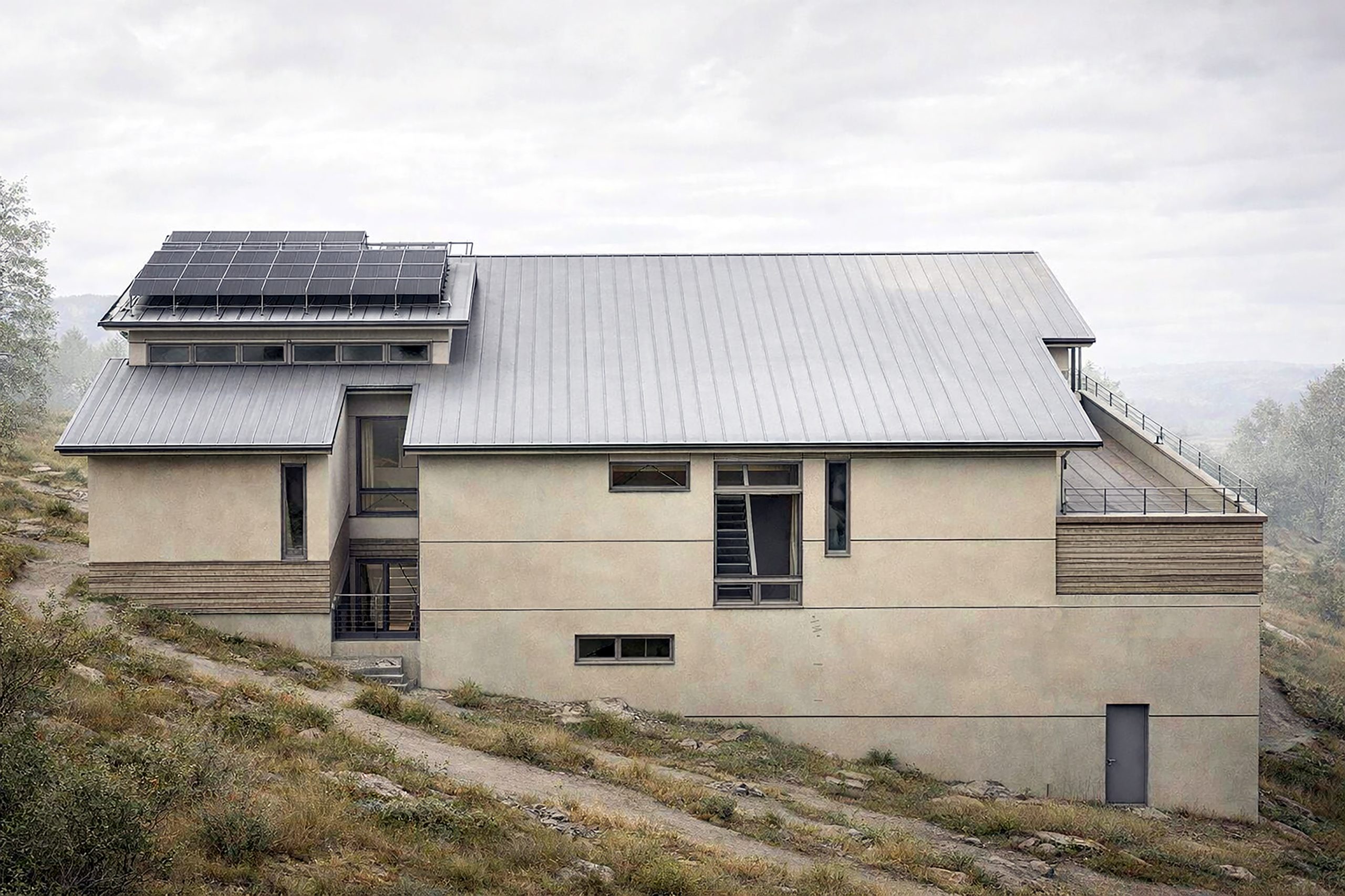
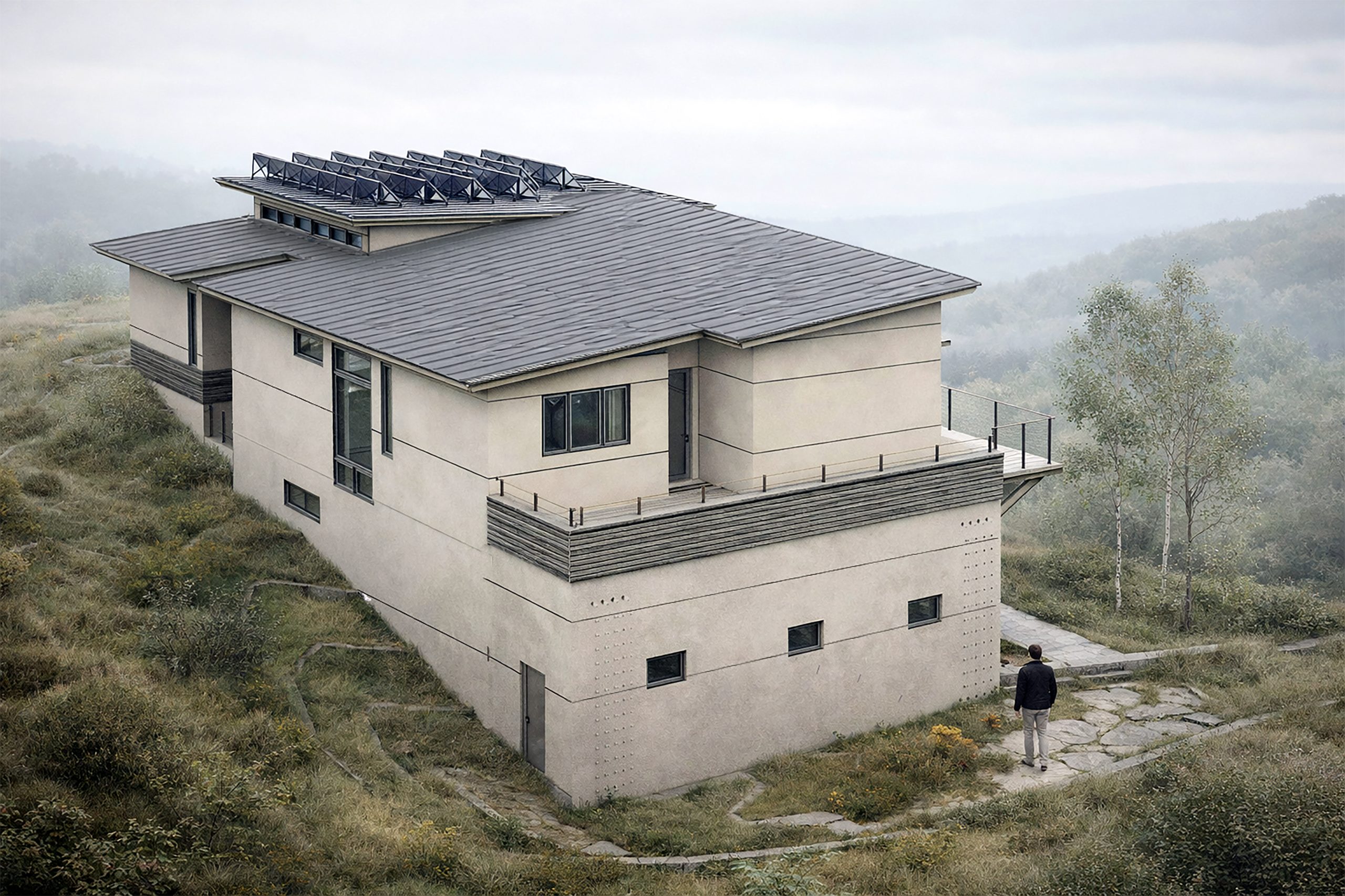
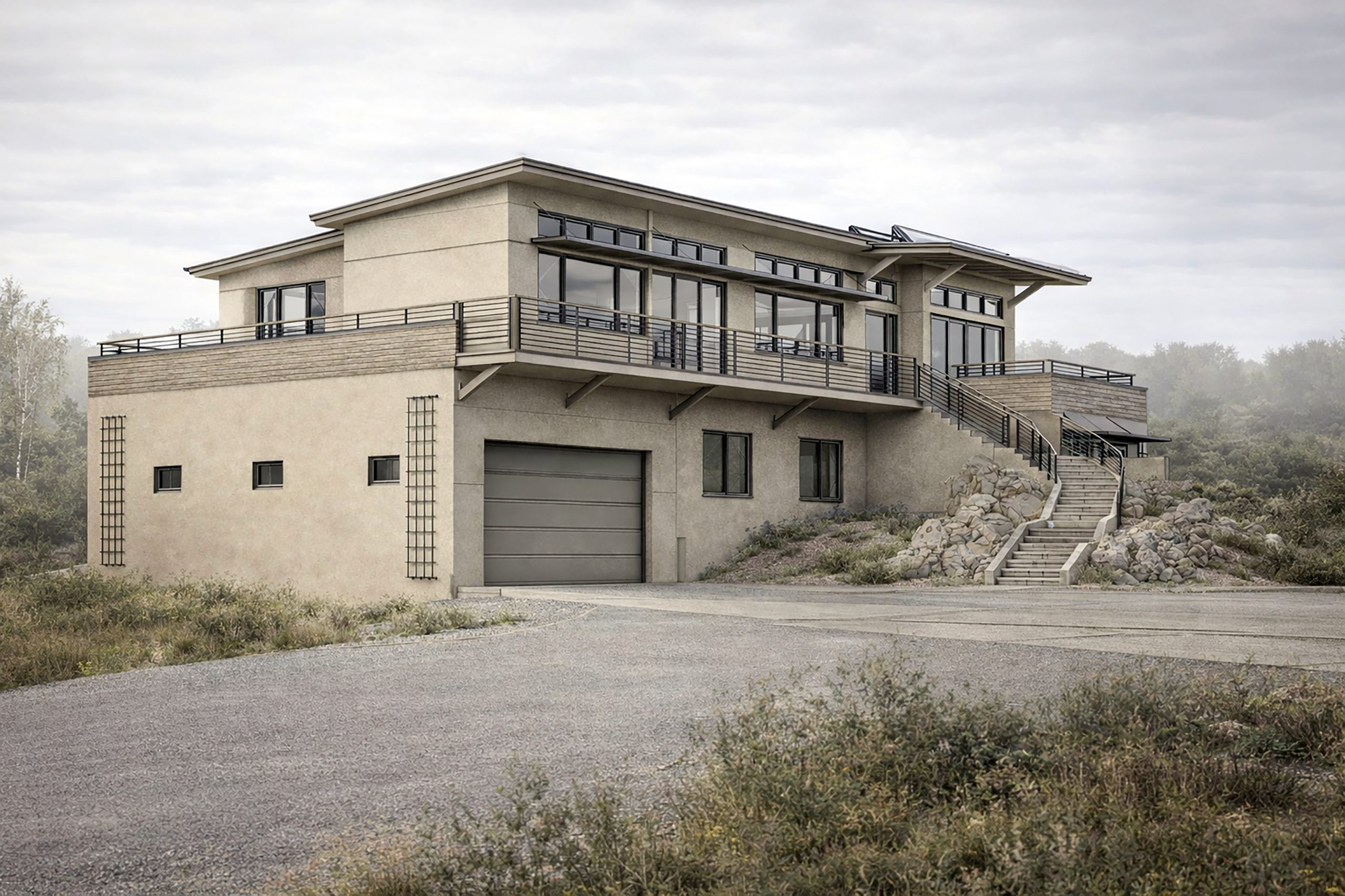
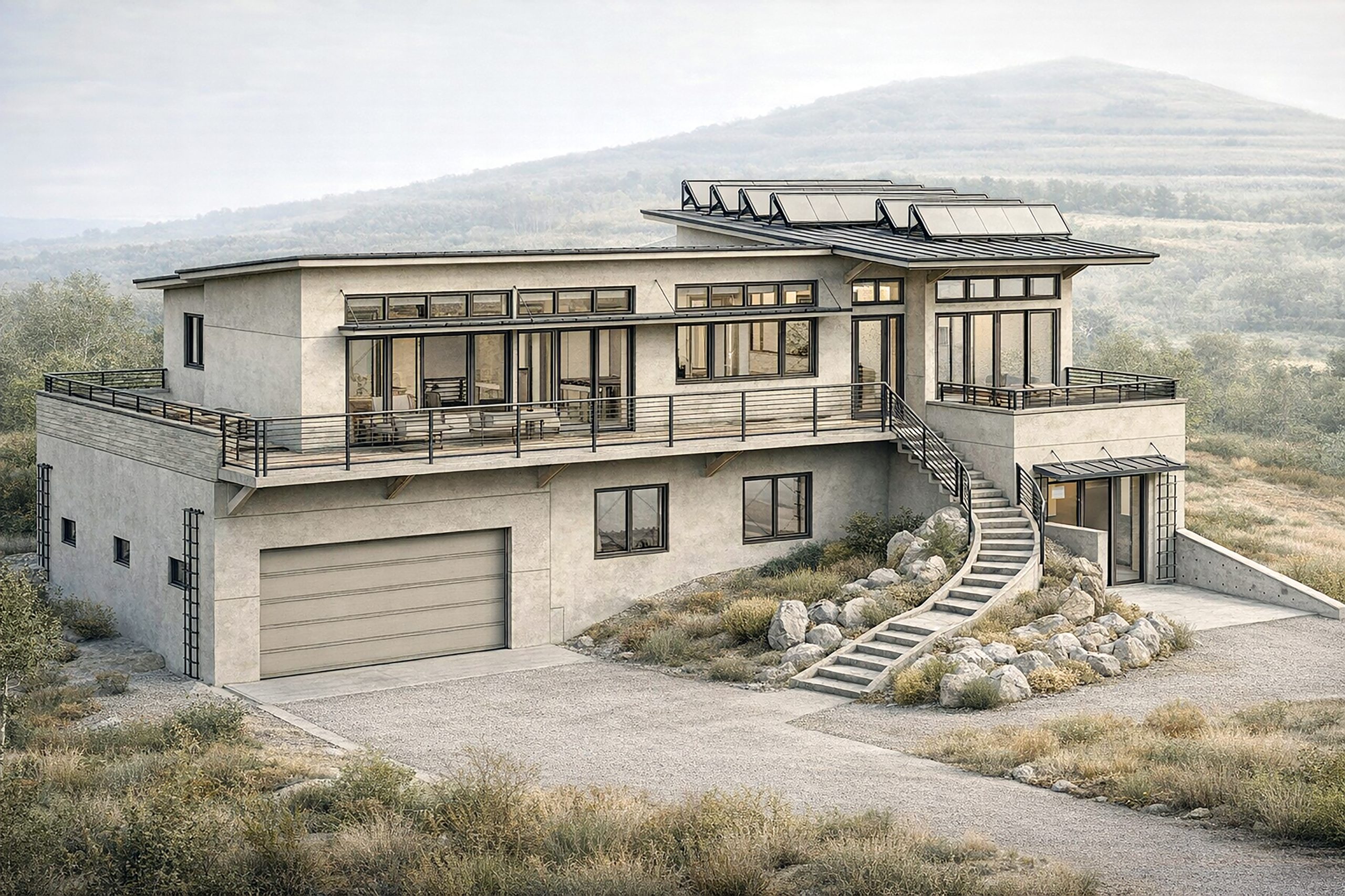
We employed insulated concrete forms for the foundation and exterior walls to establish a robust, airtight, and highly insulated thermal envelope. The building was carefully oriented and proportioned to maximize passive solar gain during colder months while controlling heat gain in summer through overhangs, shading devices, and window placement. Continuous insulation, reduced thermal bridging, and thoughtful detailing reflect passive-haus principles adapted to the regional climate. Material selections and exterior articulation were calibrated to sit comfortably within the foothills landscape while reinforcing durability and low maintenance over time.
RESULT The Residence delivers a high-performing, energy-efficient home that supports year-round comfort with reduced operational demands. Passive solar strategies and ICF construction work together to stabilize interior temperatures, improve indoor air quality, and significantly lower energy consumption. The residence achieves a refined balance between performance and design, offering expansive views, generous daylight, and durable construction suited to the Boise foothills. It stands as a resilient, future-focused home tailored to the evolving needs of a growing family.