

CHALLANGE
Design an independent accessory dwelling unit on a constrained backyard site within an established San Jose neighborhood. The project needed to respect zoning setbacks, maintain privacy between dwellings, and feel generous despite a compact footprint, while supporting long-term adaptability near mass transit.
SOLUTION
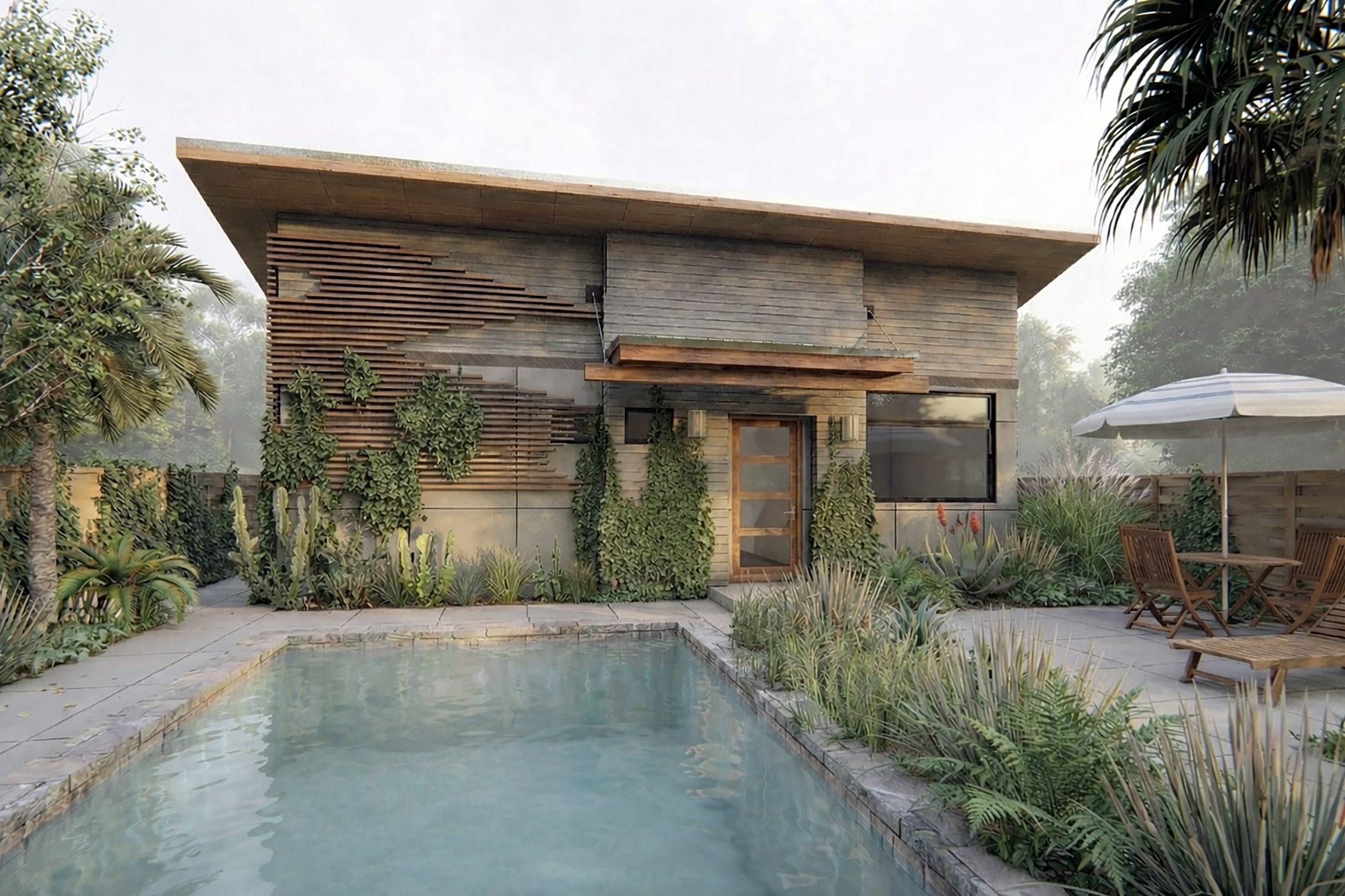
The ADU is organized around a small, inward-facing courtyard that becomes the spatial heart of the home. This strategy creates visual depth, introduces daylight from multiple directions, and allows interior spaces to feel open rather than compressed. The architectural language is contemporary and restrained, using durable materials and clean detailing to integrate the building into its garden setting. Deep overhangs and carefully placed openings moderate light and provide passive comfort. Inside, efficient circulation and strong indoor–outdoor connections maximize livability within a compact plan. Large glazed openings frame the courtyard, allowing the landscape to function as an extension of the living space. The result is a dignified, well-crafted dwelling that supports increased urban density while providing a comfortable, private home that exceeds expectations for its size.

[*Completed in collaboration with Tamarack Grove]